


Introduction
Modern temperature sensors are widely used in many operations, including industrial systems and domestic gadgets. They are built with high-quality technology to deliver precise real-time data, making it simple to improve automation, increase efficiency, and make operations safer.
Knowing how these sensors work and their prospective applications can be extremely useful for a tech enthusiast, business owner, or even a homeowner. Let us learn about and discuss the features, fundamental functions, benefits, and primary application areas of smart devices. This blog will cover all you need to know about smart temperature sensors and how they are changing the future of temperature-moderating systems.
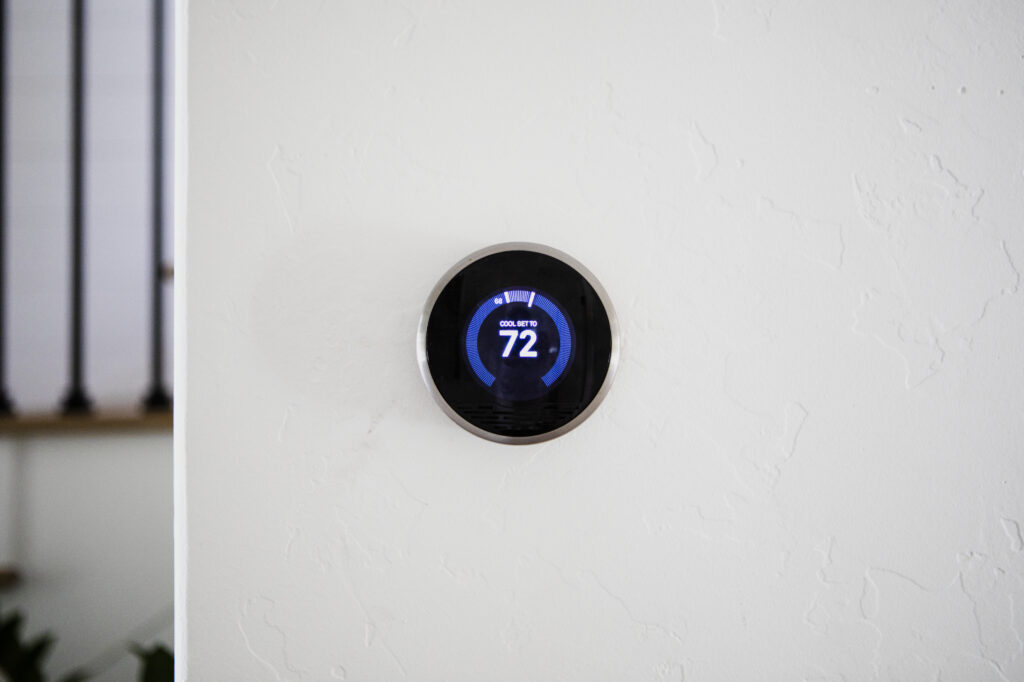
What are Smart Temperature Sensors?
The Smart Temperature Sensor automatically adjusts to its surroundings by utilizing temperature data through a built-in transducer. It is then wirelessly centralized for monitoring reasons.
These sensors have incorporated more functionality, such as IoT compatibility, real-time warnings, and remote access. Their adaptability has significantly increased their efficiency, making them ideal for application in a variety of industries, including healthcare, industrial operations, environmental monitoring, and home automation.
How do smart temperature sensors work?
Temperature and humidity sensors monitor environmental conditions by quantifying certain characteristics that vary with temperature or moisture levels. For example, thermistors measure temperature by detecting changes in electrical resistance, which consistently decreases as temperature rises.
Thermocouples generate a small voltage based on the temperature difference between two points. Infrared sensors can measure the thermal radiation emitted without having to touch the body.
These measurements can be made without coming into touch with the object since infrared temperature sensors can detect the thermal radiation that is released. They make precise and effective monitoring possible in a variety of applications.
Smart temperature sensors have been embraced by a wide range of industries. In industrial applications, they maintain optimal settings for equipment and procedures, reducing downtime and increasing production. They help to control heating and cooling in home automation systems, making them more environmentally friendly and comfortable for the occupants.
Benefits of using smart temperature sensors
Smart Temperature Monitoring & Control
Smart temperature sensors provide highly accurate real-time measurements (±0.1°C), enhancing efficiency in healthcare, manufacturing, and food processing. With AI-enabled algorithms, IoT integration, and cloud connectivity, they optimize operational parameters, prevent spoilage in cold chains, and enable predictive maintenance.
Integration with smart home systems
In smart homes, these sensors monitor and adjust indoor temperatures, improving comfort, energy efficiency, and safety. Compatible with platforms like Alexa and HomeKit, they support automated climate control, reduce energy usage by up to 23%, and detect unusual behavior to prevent hazards.
Save energy with smart thermostats
AI-powered smart thermostats like Nest and Ecobee learn user habits, manage HVAC systems efficiently, and can save 10–15% on heating and cooling costs. Integration with smart grids and renewable energy systems further enhances energy management across broader networks.
temperature sensor types
Temperature sensors taypes , each suited for different applications. Common types include thermistors, which change resistance with temperature; thermocouples, which generate voltage based on temperature differences; and RTDs (Resistance Temperature Detectors), which offer precise and stable measurements. These sensors are widely used in HVAC systems, smart homes, and industrial monitoring.
Final Thoughts
Smart temperature sensors are transforming the way we monitor, control, and optimize environments across industries and homes. With precise measurements, IoT connectivity, and AI-powered features, they enhance efficiency, improve comfort, reduce energy consumption, and enable predictive maintenance.
SAIT provides smart temperature sensors that help you monitor and adjust temperatures accurately. Contact us to learn more about our sensors.
FQA
1. What is a smart temperature sensor?
A smart temperature sensor is a device that measures temperature and transmits the data digitally for monitoring, automation, or control in smart homes, industrial systems, and HVAC applications.
2. How to calibrate a temperature sensor?
Calibrate a sensor by comparing its readings to a reference thermometer at known temperatures, then adjust the output or apply correction factors t ensure accurate measurements.
3. What is the most accurate temperature sensor?
Platinum RTDs (PT100 or PT1000) are the most accurate due to their linear response, stability, and minimal drift over time.
4. Can smart temperature sensors monitor humidity too?
Yes, many smart temperature sensors also include humidity monitoring, providing real-time data for environmental control, HVAC systems, and home automation.
5. How do smart temperature sensors communicate?
They can communicate via Wi-Fi, Bluetooth, Zigbee, or Z-Wave, sending data to apps, cloud platforms, or home automation systems.
FAQs
How do smart temperature sensors work?
Smart temperature sensors measure temperature using technologies like thermistors, thermocouples, or infrared detection. They collect real-time data, transmit it wirelessly, and integrate with IoT or AI systems to adjust settings automatically, ensuring precise and efficient temperature control.
Can smart temperature sensors be used in smart homes?
Yes. In smart homes, these sensors monitor and regulate indoor temperatures, integrate with platforms like Alexa or Apple HomeKit, enhance comfort, improve energy efficiency, and detect unusual conditions to prevent hazards.