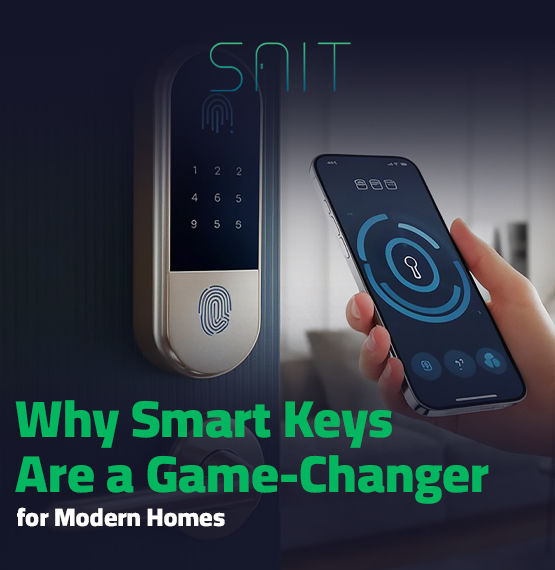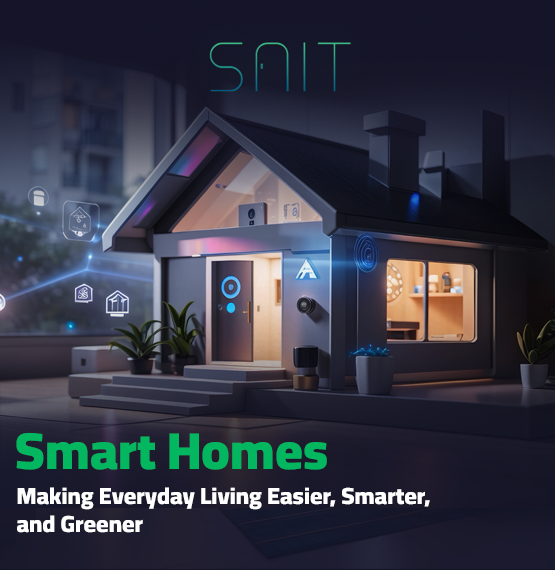


Smart Home Solutions have become one of the most exciting examples of how AI is transforming modern living.. Today, we’re seeing the rise of AI smart homes, where your home can adapt to you and manage your tasks without asking other than that it has a great impact on the environment, A technology that is greener and eco-friendly this blog we’re going to get to know how AI can reshape the smart home
A smart home not only makes your life easier, it adds a new dimension of luxury by letting you control every detail with the push of a button or even a simple voice command. Best of all, this technology also serves the environment by minimizing waste and using energy efficiently, combining personal comfort with environmental responsibility.
Smart Home vs. Home Automation: What’s the Difference?
It’s easy to confuse the term “smart home” with “home automation,” but they’re not the same thing.
- Home automation typically refers to systems that use specialized wiring and protocols to control devices within a home.
- Smart homes, on the other hand, rely on connected devices that communicate through the internet. Instead of needing complex installations, smart devices connect to Wi-Fi and can often be managed through one or more apps.
In other words, home automation is more like a static, closed system, while smart homes are dynamic systems that are scalable and customizable according to the needs of each individual or household.
Why a Smart Home Is More Practical
The biggest advantage of
smart home
It’s the practical side. Instead of complex electrical extensions, any ordinary home can be turned into a smart home with simple steps.
Imagine sitting in your living room and controlling the lights, curtains, and temperature from your phone or through voice commands. It’s not just about convenience, it’s also about energy efficiency, as you can monitor your home appliances in real-time and adjust their usage to suit your lifestyle.
its practicality. With smart control, you can manage multiple aspects of your home without complicated installations or rewiring. For example: Want to dim your bedroom lights, adjust your thermostat, or close the blinds—all without leaving the couch? A smart home makes that possible.
The Magic of Smart Control
What makes a smart home truly “smart” is the ability to unify devices into a single ecosystem. Instead of using one app for your lights, another for your security, and a third for your thermostat, smart control platforms let you bring everything together.
This integration opens the door to advanced automations. For example:
- Your lights automatically turn off when you leave the house.
- The thermostat adjusts to your preferred temperature before you get home.
- Receive instant alerts when motion or intrusion is detected.
- Security cameras send alerts directly to your phone if motion is detected.
Even better, many Smart homes systems work with voice assistants, meaning you can control your entire home hands-free. Just say the word, and your smart home responds.
How Smart Homes Support Sustainability
The benefits of
Smart home
when it comes to comfort and control, but also when it comes to the environment. Energy in traditional homes is often consumed inefficiently, leading to increased carbon emissions.
Smart homes put sustainability at the center of their work by:
- energy efficiency: Appliances automatically turn off when not in use or run during times of low electricity cost.
- Real-time monitoring: Systems that show you the exact consumption of each device, so you can see where the waste is coming from.
- Smart lighting: Works based on motion or time of day, so there’s no chance of forgetting the lights are on.
- Home Appliance Management: Schedule your washing machine or dishwasher to run at night to reduce the strain on the electrical grid.
These practices make the smart home not only a comfort option, but an eco-friendly lifestyle that minimizes both financial costs and emissions.
The Future of Smart Homes
Smart home technology is shaping a future full of possibilities as artificial intelligence (AI) becomes more deeply integrated into our living spaces. No longer just responding to commands, this technology now learns from your daily habits and takes proactive actions to enhance comfort and efficiency.
For example:
- The system learns your sleeping and waking times to automatically adjust your lighting and curtains.
- It monitors your energy consumption patterns and suggests solutions to minimize waste.
- Improves security by detecting abnormal behavior and sending immediate alerts.
We are heading towards a new phase where smart homes become more like a partner in your daily life, understanding you and anticipating your needs before you ask.
Conclusion
A smart home is no longer a luxury, but a practical way to simplify your life and improve your lifestyle. It combines comfort, efficiency, safety, and environmental sustainability. Choosing a smart home is an investment in the future, as you get a home that interacts with you, saves you time and energy, and preserves the environment at the same time. In a world where everyone is looking for smarter and more sustainable solutions, turning your home into a smart home is undoubtedly one of the smartest decisions you can make today.
FQA :
1. How do I make my home a smart home?
Start by adding smart devices like lights, thermostats, and security cameras, then connect them to a control system or app.
2. What is a smart home also called?
A smart home is also called a connected home or home automation system.
3. Can a smart home work without internet?
Some devices work locally without internet, but full smart home functionality usually requires internet.
4. What are the 4 types of automation?
The four types are lighting automation, climate automation, security automation, and entertainment automation.
5. What’s the best smart home device?
The best device depends on your needs, but smart speakers/voice assistants like Alexa or Google Home are the most versatile.